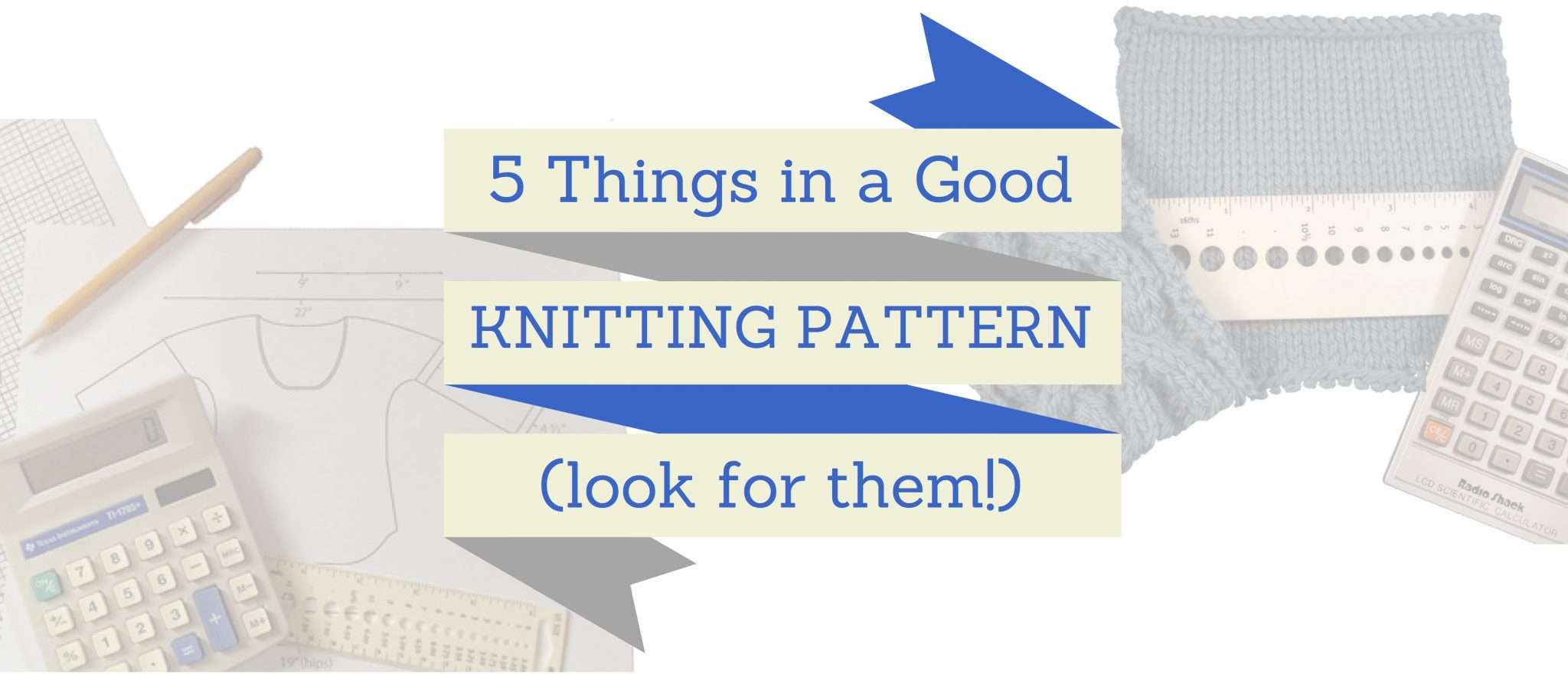
I’ve shared tips on Becoming a Better Knitter before, so I thought it was only fair to turn the tables. I’m often asked what makes a good pattern, and I used to say something lame like, “good is in the eye of the beholder.” Well, cop out no more, I’ve thought about what are the 5 things I think are a must in all of my patterns. So without further ado . . .
5 Things in a Good Sweater Pattern
1) Schematic
This is the blueprint for the sweater you are building. It’s so important to be able to understand the schematic and how it relates to the written instructions. Although with a firm understanding of gauge and pattern instructions you can draw your own schematic, it’s helpful if the pattern already has one.
2) Complete Gauge Information
This means listing not only the stitch gauge and needle, but row gauge as well. I’m always surprised when I see a pattern without row gauge. Although you might not be able to match the row gauge and stitch gauge, knowing the row gauge is vital. This will allow you to make any tweaks to the shaping zone needed.
You should also have the gauge in the dominant stitch pattern. If a sweater is all over stitch pattern but the gauge is only in stockinette, that’s a bummer.
3) Written & Charted instructions
If you find a stitch pattern like cable or lace, look for a pattern with both written and charted instructions. Not all people are “word people.” Even if you aren’t a chart person, the chart is a visual representation of the public side of the work. It’s like a picture of your knitting and it can really help you visualize your work.
4) List of Special Abbreviations & Techniques
Some stitches are considered standard and don’t need to be defined (K, P, K2tog, SSK, YO), but if you have a lesser-known stitch or a stitch that can be done more than one way, there should be an abbreviation list and a stitch definition.
Although I always say “patterns are written with the assumption of knowledge,” there’s standard pattern language, and then there are special techniques. If your pattern lists sloped bind off, or w&t, this technique should be clearly listed.
5) A Clear Picture
There should be at least one project picture that is clear and shows the fit of the garment. At the very least you should be able to SEE the sweater. I’ve seen sweater pictures with the model sitting backwards on a high back chair, holding a guitar, and half covered by a tree. Unless I’m going to knit a chair, a guitar or a tree, those pictures aren’t helpful.
 For more pattern secrets (like at the same time, reverse shaping and more), check out:
To learn the math to tweak your patterns, check out
Customizing Sweater Patterns Pt. 1 & Pt 2

For more information on schematics and patterns try:
How To Read Your Knit Stitches and Master the Pattern